

The Agent Spectrum
Autonomous Agents — AI That Executes While You Sleep
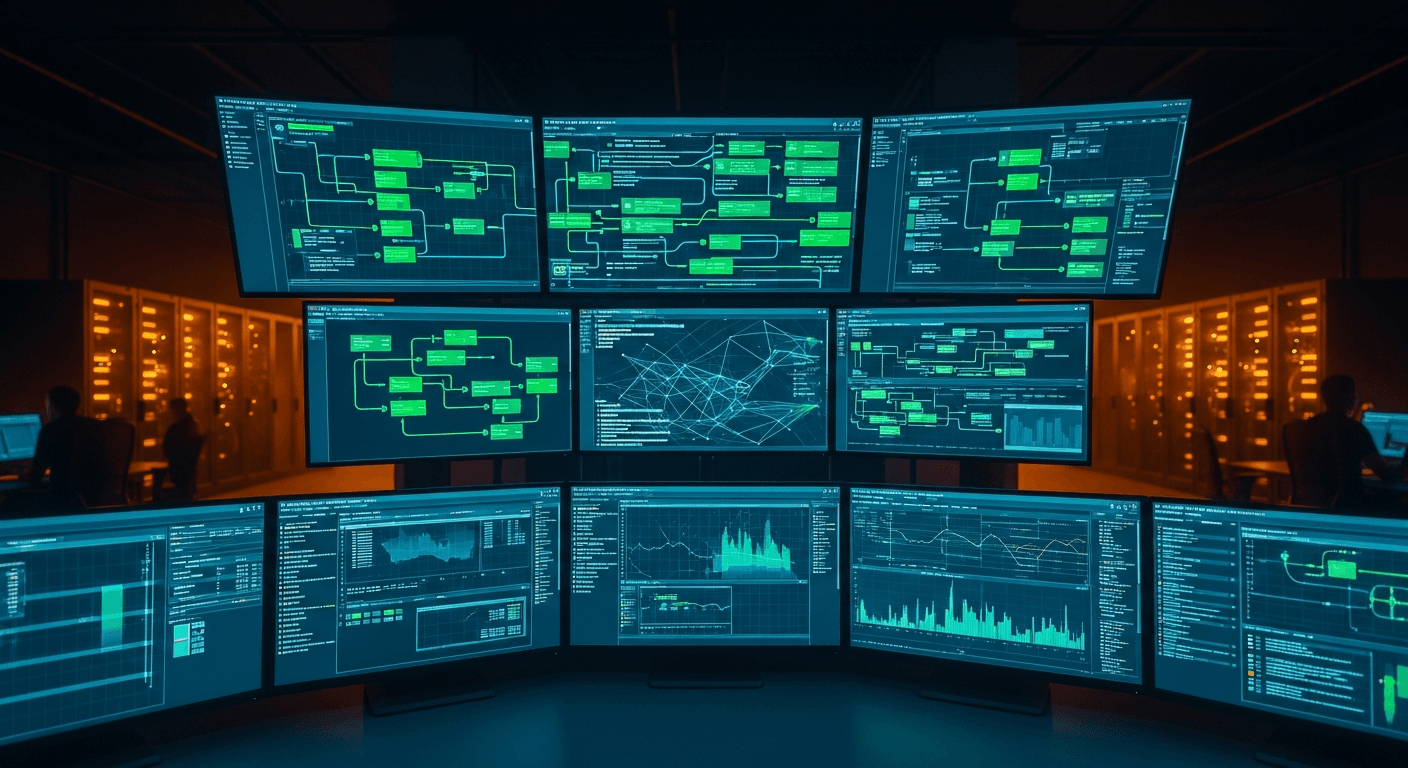
Autonomous Agents handle well-defined, low-risk tasks end-to-end — acting independently within guardrails you set. Voice agents, automated pipelines, and event-driven workflows that run your operations 24/7.
Key Takeaways
Autonomous Agents are the highest tier of the agent spectrum. They execute entire workflows independently — from voice-delivered KPI briefings to event-driven compliance reporting — within guardrails you define and with results you can audit.
- Voice agents that deliver morning KPI briefings to branch managers by phone
- Event-driven workflows that trigger actions when thresholds are crossed
- Automated data pipelines that extract, transform, and load nightly — zero human touch
- Full audit trails and guardrails: the agent acts independently, but you always have visibility
What Autonomous Agents Do
Operations That Run Without You
Autonomous Agents handle the tasks your team does the same way every time. They execute within defined guardrails, log every action, and escalate when something falls outside their scope.
Voice Agents
Daily KPI briefings delivered by phone to branch managers. Weekly performance summaries. Appointment confirmations. The agent calls, delivers, and logs — no app required.
Event-Driven Workflows
When a metric crosses a threshold — a cost spike, a missed SLA, a compliance gap — the agent triggers the appropriate response automatically.
Automated Data Pipelines
Nightly ETL processes that extract from source systems, transform for analysis, and load into your data warehouse. Zero manual intervention, full logging.
Compliance Reporting
Regulatory reports assembled, validated, and delivered on schedule. CCBHC reporting, grant submissions, financial compliance — autonomously generated from live data.
Real Examples
Autonomous Agents We've Built
Multi-Region BH Compliance Reporting
Autonomous agents that pull census data, assemble CCBHC compliance reports, and deliver them across 90+ behavioral health locations. The entire reporting workflow — from data extraction to delivery — runs without human intervention. 1,194 hours per month reclaimed.
VisionWrights CDC Pipeline (Internal)
An hourly orchestrator that coordinates Slack digests, Gmail digests, RAG ingestion, contact extraction, and client summaries — across 43 clients, autonomously. Each sub-agent has its own scope and error handling.
Ticket Resale Platform
Pricing agents that autonomously monitor market conditions and adjust ticket prices in real-time. Inventory agents that track availability across venues and trigger restocking workflows without human intervention.
VisionWrights Client Provisioning (Internal)
When a contract is signed, an agent automatically creates Google Drive folders, Slack channels, Gmail groups, Clockify projects, and CRM records. Full operational infrastructure in seconds — zero-touch onboarding.
The Change Management Reality
We Went Through It First
Deploying Autonomous Agents changes how your team works. Processes they owned become processes they oversee. That shift creates real anxiety. We know because we lived through it ourselves — rebuilding our own operations on agents.
We don't pretend it's frictionless. We can name the discomfort before your team feels it. That foreknowledge — earned through our own transformation — is what separates VisionWrights from firms that sell agent technology without having lived through the adoption.
24/7
Agents work while you sleep
43
Clients managed by our orchestrator
0
Manual steps in provisioning
100%
Audit trail on every action
Common Questions About Autonomous Agents
What if the agent makes a mistake?
How do we know it's doing the right thing?
Should we start with Autonomous Agents?
What does this cost?
Explore the full Agent Spectrum
Ready for Operations That Run Themselves?
Tell us which processes your team runs manually that follow a consistent pattern. Those are your candidates for Autonomous Agents.